Funny Face Tracing for Web Design Projects
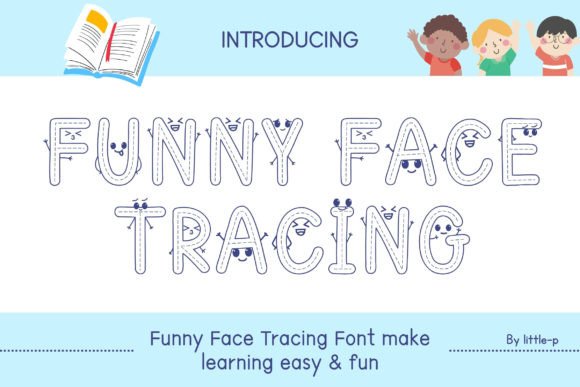
I was working on a new landing page for a boutique online store when I stumbled upon Funny Face Tracing. It's a display font with a playful twist—each letter features a cute, amusing facial expression. As someone who values both aesthetics and functionality in typography, I wanted to see how this font would perform in a real-world web design context.
The first thing I noticed about Funny Face Tracing is its personality. It’s not just a font—it's an experience. The faces add a layer of charm that makes it ideal for creative projects targeting younger audiences or brands that want to inject some fun into their digital presence. But I had to ask myself: would it work well on a website?
Testing Funny Face Tracing in a Hero Section
I started by applying the font to the hero section of the landing page. The headline read “Discover Unique Designs,” and I placed it over a vibrant background image of handcrafted products. The expressions in each letter made the text stand out without overpowering the visuals. It felt inviting and engaging, which is exactly what you want for a brand aiming to connect with customers on a personal level.
Next, I checked how it looked on mobile. The expressions remained clear even at smaller sizes, though I adjusted the font size slightly to ensure legibility. It didn’t feel cluttered, and the playful tone matched the overall vibe of the site. This suggested that Funny Face Tracing could be a great fit for sections where a lighthearted tone is appropriate.
Using Funny Face Tracing Across Different Elements
After testing the hero section, I considered other areas where the font might be useful. For instance, using it for section headings or call-to-action buttons could add visual interest without sacrificing readability. I experimented with pairing it with a clean sans serif font for body copy, which created a nice contrast and helped maintain visual hierarchy.
On the product listing pages, I used Funny Face Tracing for category titles. It gave each section a unique identity while keeping the layout organized. However, I avoided using it for long paragraphs or navigation menus, as the decorative style isn't suited for dense blocks of text.
Another area I tested was the footer. I used it for social media links and contact information. While it worked, I found that a simpler font was more effective for functional elements like links and form fields. This reinforced the idea that Funny Face Tracing is best reserved for decorative or expressive uses rather than everyday interactions.
Readability and Brand Consistency
One of my main concerns was whether the font would impact readability. I ran a few A/B tests comparing Funny Face Tracing with a standard sans serif font. Users spent slightly more time scanning content with the playful font, but only when the context was appropriate—like in promotional banners or creative portfolios. In more formal sections, such as testimonials or pricing tables, the standard font performed better.
This led me to think about brand consistency. If the brand voice is fun and approachable, Funny Face Tracing can be a powerful tool. But if the brand is more professional or corporate, it might not align with the desired tone. It’s important to match the font with the brand’s personality and audience expectations.
Font Pairing and Performance Considerations
I also explored font pairing options. Combining Funny Face Tracing with a modern sans serif font like Montserrat or Lato worked well for headers and subheadings. It created a balanced look that felt both creative and professional. For editorial layouts, I paired it with a classic serif font, which added a touch of elegance without losing the playful essence.
Performance was another consideration. I made sure to use webfont optimization techniques, such as loading only the necessary weights and ensuring the font files were compressed. This kept the page load speed within acceptable limits, which is crucial for user experience and SEO performance.
Before finalizing the font choice, I checked the licensing details. It was important to confirm that the font was suitable for commercial use and that it supported all the languages needed for the project. I also verified that it included different styles and alternates, which gave me more flexibility in design.
Final Thoughts on Funny Face Tracing
In the end, Funny Face Tracing became a key part of the landing page design. It brought a sense of joy and creativity to the site without compromising usability. Whether used for headlines, promotional banners, or creative portfolio sites, it has a unique ability to capture attention and convey emotion through typography.
If you're designing for a brand that wants to stand out with a touch of humor or charm, Funny Face Tracing could be the perfect addition to your design toolkit. Just remember to use it thoughtfully, considering readability, brand voice, and user experience in every decision you make.